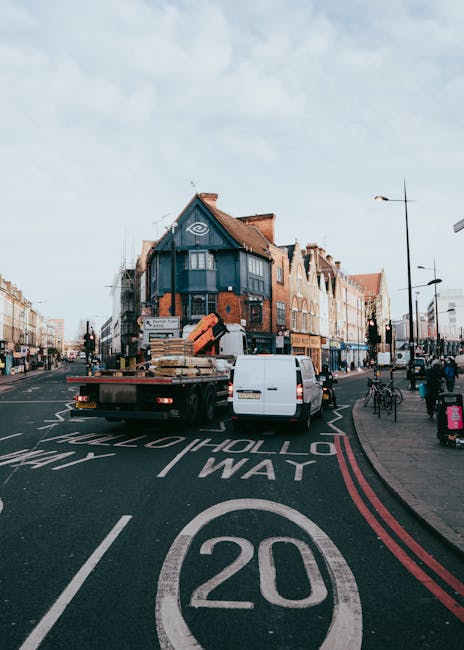
Tower Hamlets Council Permits for Whitechapel Moving Vans
If you are planning a move in Whitechapel, the parking question can become the whole story very quickly. Narrow roads, busy stretches, controlled parking zones, loading bays that fill up early, and a van that needs to stop right where everyone else wants to stop - it all adds up. That is where Tower Hamlets Council Permits for Whitechapel Moving Vans come in. They can be the difference between a calm, organised move and a morning spent circling the block with a back-to-back van load and a growing sense of panic.
This guide breaks down how moving van permits usually work in the area, why they matter, who typically needs them, and how to avoid the common mistakes that cause delays. We will also look at practical planning tips, compliance points, and a few real-world scenarios so you can judge whether your move needs a permit, a loading bay strategy, or a bit of both.
Why Tower Hamlets Council Permits for Whitechapel Moving Vans Matters
Moving vans do not just need road space; they need legal, practical space. In Whitechapel, that can be tricky because the local streets are often busy, access is tight, and parking rules are enforced. A van parked without the right permission may be moved on, fined, or forced to keep driving until a legal stopping point appears. That wastes time, and time is the one thing you rarely have spare on moving day.
For a household move, even a small delay can snowball. The removal crew may arrive at the property before the van can load. Your boxes may be ready, but the lift is occupied or the street is blocked. A sofa can sit on the pavement, and suddenly the whole day starts to feel like a juggling act. If you are also dealing with packing logistics, the process is smoother when you have already sorted the basics - our guide to packing for a stress-free house move is a useful companion here.
Permits matter because they reduce friction. They can make the difference between a controlled loading setup and a scramble. And in local moves, that really counts.
Key point: in Whitechapel, parking and loading are often as important as lifting and transport. If the van cannot stop where it needs to stop, the rest of the move gets harder fast.
How Tower Hamlets Council Permits for Whitechapel Moving Vans Works
At a practical level, moving van permits are there to allow a vehicle to stop or load in a place that would otherwise be restricted, or to help you use a bay correctly for a short period. The exact conditions depend on the street, the time of day, the vehicle size, and whether the location is in a controlled parking area. The important thing is not to guess. Parking rules in London can be annoyingly specific - and yes, they can change from one side street to the next.
For many Whitechapel moves, the van will need one of three things: a lawful loading window, a parked position in a bay that permits loading, or a council-approved arrangement that supports the move. Sometimes a permit is required for the vehicle itself; sometimes the real issue is whether the van can occupy the space long enough to load safely. You should also factor in building access. A flat move on an upper floor without a lift usually needs more time than people expect. If that sounds familiar, our Whitechapel stair access guide explains why narrow Victorian stairs often change the whole schedule.
In practice, you should think about three layers:
- Vehicle permission: whether the van can legally stop or wait in the area.
- Kerbside access: whether loading is possible without blocking traffic or breaking parking rules.
- Timing: whether the move is happening in a busy period where a permit or bay arrangement becomes much more important.
That is why permit planning should happen before moving day, not the night before while you are surrounded by tape, bubble wrap, and one mysteriously missing kettle.
Key Benefits and Practical Advantages
When a moving van is properly planned around local parking rules, the move tends to run with far less drama. That sounds obvious, but you only really appreciate it when you have seen the alternative. A couple of practical benefits stand out.
1. Better timekeeping
Permits and loading arrangements reduce the risk of circling, double-handling, or waiting on the roadside. That keeps the crew on schedule and helps keep costs under control.
2. Less physical strain
If the van can park close to the property, furniture does not need to be carried extra distance. That matters for heavier items and awkward corners. For anyone wondering about safe lifting, this guide to kinetic lifting offers a good practical angle.
3. Lower risk of parking penalties
Tickets and enforcement delays are a very unglamorous way to ruin a move. A permit can help reduce that risk, although you still need to comply with the permit conditions exactly.
4. Better building access coordination
In apartment blocks and maisonettes, access is often shared. Having a planned loading arrangement means you can work around lifts, entry doors, and residents without creating an awkward bottleneck.
5. A calmer move overall
Truth be told, moving day is stressful enough. When the van has a clear, legal place to stop, your brain gets to focus on the move itself instead of the parking drama. Which is a relief. A proper one.
Who This Is For and When It Makes Sense
Not every move needs the same level of parking preparation. A permit-heavy approach makes most sense when the van is likely to face restrictions, or when delays would be expensive. That said, a lot of people in Whitechapel underestimate their own need until the day arrives.
This topic is especially relevant if you are:
- moving from a flat in a controlled parking zone
- living on a street with limited loading space
- relocating large furniture or bulky household goods
- organising a same-day move with tight turnaround times
- working around school runs, market traffic, or weekday congestion
- moving from an upper-floor property with stairs and no lift
If you are a student moving into or out of the area, timing and vehicle access can be especially tight. For smaller moves, a lighter setup may be enough, and student removals in Whitechapel often fit those quicker, lower-volume jobs.
Office moves and commercial moves are another story. They often need a more structured loading plan because the schedule is tied to business hours, staff coordination, and delivery windows. In those cases, browsing the broader office removals Whitechapel approach can help you think through access, parking, and staging more clearly.
Step-by-Step Guidance
If you want to handle Tower Hamlets Council Permits for Whitechapel Moving Vans sensibly, start early and work in order. A tidy process beats a rushed one every time.
- Check your move date and time. Weekday daytime moves usually face more pressure than early morning or off-peak slots.
- Look at the street itself. Is there space to stop? Are there yellow lines? Is there a loading bay? Does the building frontage allow easy access?
- Assess the size of the van. A small van and a long wheelbase removal vehicle do not face the same practical issues.
- Confirm whether loading is allowed. Some areas permit short loading, but you still need to obey time limits and restrictions.
- Factor in property access. Stairs, lifts, and shared entrances all affect how long the van will need to stay nearby.
- Plan for item preparation. The more ready your items are, the less time the van needs at the kerb. Decluttering first can make a real difference; our decluttering-first guide explains why this step pays off.
- Build in a buffer. Traffic, parking searches, and a delayed handover can all add time. A buffer saves stress.
- Keep documents and contact details handy. If the driver or crew needs to make a quick check, you do not want to be hunting through a drawer for the basics.
A lot of people make the mistake of treating parking as a last-minute admin task. It is not. It is part of the move plan, right there with boxes and tape.
Expert Tips for Better Results
Here is where the small details really help.
- Use the earliest sensible slot. Whitechapel traffic can change by the hour. Early starts are often easier for loading and parking.
- Measure awkward items before the day. If the sofa barely fits through the hallway, you do not want to discover that after the van has parked illegally outside for too long.
- Keep heavy items together. Grouping furniture and boxes reduces loading time and minimises repeated trips.
- Prepare one clear loading zone inside the property. Even a small hallway staging area helps.
- Communicate with neighbours if needed. A quick heads-up can avoid confusion when a van briefly occupies a tight frontage.
- Ask about insurance and handling. Good moving practice is not just about speed; it is also about safety and care. If you want a broader view of what responsible movers should think about, insurance and safety guidance is worth reviewing.
One small but useful observation: the best moves in this part of London usually look almost boring from the outside. No chaos, no last-minute decision-making, just clear timing and a van that shows up where it can legally and safely work. Boring is excellent on moving day.
Common Mistakes to Avoid
Most permit problems are avoidable. They usually come from assumptions, not bad luck.
- Assuming a van can "just stop for five minutes". Five minutes can still be enough for a ticket or a dispute.
- Forgetting about peak traffic and school runs. Whitechapel is not the place to leave access to chance.
- Underestimating loading time. A large move, or a move involving stairs, simply takes longer.
- Not checking whether the address is in a controlled parking area. Many people miss this and only realise when the van arrives.
- Booking the wrong vehicle size. Too small means too many trips; too large can create parking trouble.
- Leaving packing until the morning of the move. That is how loading spaces disappear while you are still wrapping plates.
- Ignoring furniture dismantling needs. If a wardrobe needs to come apart, plan for the extra time. The same goes for mattresses and bed frames - our bed and mattress moving guide is helpful here.
And yes, one classic mistake is trying to move a piano like it is just another heavy box. It really, truly is not. The risks go up quickly. If that is on your list, read why DIY piano moving is usually a bad idea before anything else.
Tools, Resources and Recommendations
You do not need a complicated toolkit, but you do need the right planning materials. A good move is part admin, part logistics.
- Site notes: write down the property address, nearest landmarks, and any access notes.
- Photo reference: a couple of pictures of the frontage and street can help you plan loading space.
- Room labels: makes unloading smoother and avoids pile-ups near the entrance.
- Furniture list: useful for estimating loading time and deciding whether a permit window is realistic.
- Packing materials: sturdy boxes, tape, covers, and protective wrap.
- Storage backup: if access timing becomes awkward, temporary storage can save the day. See storage options in Whitechapel if you need a fallback.
For practical move preparation, a few supporting reads can make life easier. this smooth house move guide helps with the wider process, while getting the property pristine before leaving is useful if you are handing keys back the same day.
If you are coordinating a move with a removal company, it also helps to compare the likely service style before booking. Some people only need a straightforward man-and-van setup, while others need a full removal team. The wider services overview can help you see the difference in a practical way.
Law, Compliance, Standards, or Best Practice
Parking and loading in London sits in a space where local rules, road signs, and common sense all matter. The safest mindset is simple: treat any restriction as real until you have confirmed otherwise. If a bay has conditions, follow them exactly. If a road has loading limits, do not assume you can stretch them because the van is only there briefly.
Best practice usually means:
- checking local parking restrictions before the move
- planning your van size around access, not just volume
- allowing enough time for loading and unloading
- keeping the vehicle within lawful stopping rules
- avoiding obstruction of pedestrians, emergency access, or resident access
- using competent movers who understand safe handling and local access issues
For anyone handling a heavy household move, health and safety matter too. A removal job should reduce risk, not add to it. If you want to understand the company side of that expectation, health and safety policy information gives a sense of the standards that responsible movers should follow.
There is also a broader trust angle. If you are choosing a provider for a sensitive move, it can help to check the company background and values. That is where pages like about the team, about the team and the business policies around sustainability and complaints become useful in a wider decision-making sense. Small note: if a move quote looks suspiciously vague, that is worth paying attention to. Very worth it.
Options, Methods, or Comparison Table
There is more than one way to manage Whitechapel moving access. The right option depends on the street, the time slot, and how much you are moving.
| Method | Best for | Strengths | Trade-offs |
|---|---|---|---|
| Short loading stop | Quick, light moves | Simple and fast if the road allows it | Not always available; timing-sensitive |
| Parking bay with loading allowance | Flats and standard household moves | Good balance of access and control | Needs careful checking of restrictions |
| Permit-supported move | Busy streets or longer loading jobs | More predictable for crews and residents | Requires advance planning |
| Alternative pickup point | Very restricted streets | Can reduce enforcement and access issues | May involve extra carrying distance |
In many Whitechapel moves, the "best" option is not the one that sounds easiest. It is the one that prevents hidden delays. A slightly longer walk with a trolley may be better than a van trying to force a stop where it should not be.
Case Study or Real-World Example
Consider a typical Whitechapel flat move on a weekday morning. The property is on a narrow street, the lift is small, and the client has a double bed, a sofa, several boxes, and a couple of fragile items. On paper, it looks manageable. In reality, the van cannot simply park outside and stay there indefinitely.
So the move is planned with a clear loading window. The crew arrives ready, boxes are labelled, and the heaviest items are staged near the door. The van stops as close as the road layout allows, and the move proceeds in a steady flow. No shouting across the street. No desperate reshuffling. The entire process is much calmer because the parking question was handled before the first box left the hallway.
That same move would have been very different without planning. The driver might have had to move on, circle back, or wait for an opening. The client would still be standing there with half-packed drawers and a growing knot in the stomach. Not ideal, to say the least.
This is also why same-day moves can be risky in busy parts of Whitechapel. They are possible in some situations, but only when the access picture is simple enough. If you are dealing with a fast turnaround, same-day removals in Whitechapel is worth reading before you promise yourself the impossible.
Practical Checklist
Use this checklist before moving day. It is simple, but it catches a lot of avoidable issues.
- Confirm your moving date and time
- Check street parking restrictions and loading options
- Decide whether the van needs permit support or a loading bay plan
- Measure any bulky furniture
- Label boxes by room
- Pack fragile items separately and clearly
- Disconnect appliances in good time
- Clear hallways and entryways
- Prepare any building access details
- Keep keys, contact numbers, and move notes close by
- Have a plan for waste, recycling, or last-minute discards
- Build in extra time for stairs, traffic, or weather
If you are still reducing clutter at the last minute, it may help to revisit your priorities. Our declutter-first article can help you strip the job back to what actually needs moving.
Conclusion
Tower Hamlets Council Permits for Whitechapel Moving Vans are not just paperwork. They are part of a smart moving strategy in a busy, tight, often unpredictable part of London. When you plan the van access properly, everything else becomes easier: loading is faster, stress drops, and the move feels organised rather than improvised.
The best approach is straightforward. Check the street, match the van to the access, allow enough time, and do not leave parking decisions until the last second. That little bit of planning can save you a lot of hassle. And honestly, on moving day, hassle is the last thing anyone needs.
For a smoother wider move, it can also help to think beyond the van itself. Packing, decluttering, furniture prep, and safe lifting all play a part. If you want the whole picture, the linked guides in this article will give you a solid head start.
Get a free quote today and see how much you can save.
Sometimes the smallest bit of planning changes the whole tone of a move. In Whitechapel, that really is half the battle.
Frequently Asked Questions
Do I always need a council permit for a moving van in Whitechapel?
Not always. It depends on the street, the parking restrictions, the time of day, and whether the van can legally stop for loading. Some moves can be managed with loading space alone, but many busy Whitechapel streets need closer planning.
How far in advance should I arrange parking for a house move?
As early as you can. The more time you give yourself, the more likely you are to secure the right setup and avoid last-minute stress. A few days of planning is better than a few hours, and in busy periods even that can feel tight.
Can a removal van stop outside my flat for a short load?
Sometimes yes, sometimes no. Short loading may be allowed in some areas, but you still need to follow the local restrictions. Never assume a quick stop is automatically fine just because the van is there for a small job.
What happens if the van cannot park near the property?
The crew may need to use a different stopping point and carry items further, which usually takes longer. That can increase strain and make the move less efficient, so it is best to avoid the problem if possible.
Are loading bays better than regular parking for moving day?
Often they are, because they are designed for short-term use and can make access simpler. But you still need to check the conditions carefully. A loading bay is not a free-for-all.
Do small moves still need permit planning?
Yes, sometimes they do. Even a small move can run into parking problems if the street is restricted or congested. A few boxes are still a few boxes, and the van still needs somewhere legal to stop.
What should I do if I live on a narrow street?
Plan early, check access carefully, and keep the loading route as short as possible. Narrow streets in Whitechapel can be awkward, so clear timing and accurate vehicle choice matter more than usual.
Is same-day parking planning realistic in Whitechapel?
It can be, but it is risky. Same-day moves are often possible only when the access is simple and the parking situation is straightforward. If the street is busy, a little advance planning usually saves you a headache.
How can I reduce the time the van needs to stay outside?
Pack fully in advance, label boxes clearly, dismantle furniture where needed, and stage items near the exit. The less time spent sorting on the pavement or in the hallway, the smoother the whole process becomes.
What is the biggest mistake people make with moving van permits?
Usually it is assuming parking will sort itself out on the day. It rarely does. Whitechapel is busy, and small access errors can create big delays.
Can storage help if parking or access becomes complicated?
Yes. Temporary storage can take pressure off a move if timing, access, or building rules get in the way. It is a practical fallback, not a failure.
Where can I get help with the rest of the move?
For furniture handling, local moves, packing, and access planning, it helps to work with a removal service that understands Whitechapel's streets and building layouts. A well-planned move is usually the one that feels least dramatic, which is exactly what you want.