Health and Safety Policy for Man With Van Whitechapel
 This health and safety policy sets out the standards expected from a man with van Whitechapel service when carrying out loading, transport, and delivery work. The purpose of the policy is to protect staff, customers, members of the public, and property while maintaining a safe and efficient service. It applies to every stage of the job, from planning and packing through to unloading and final checks. All operatives are expected to work with care, follow agreed procedures, and use safe working practices at all times.
Our Commitment
The company is committed to providing a safe working environment and to reducing risks wherever possible. As part of our Whitechapel man and van operations, we assess tasks before work begins, identify hazards, and put suitable controls in place. This includes using the right equipment, handling items correctly, maintaining vehicles in good condition, and ensuring that staff are physically able to complete assigned duties. No work should proceed if it presents an unnecessary danger.
 Risk assessment is a key part of our approach. Before each move, workers should consider the weight, size, shape, and stability of items being handled, as well as access points, stairs, tight spaces, weather conditions, and parking arrangements. A van removal service in Whitechapel must also account for manual handling risks, vehicle loading balance, and the possibility of slips, trips, and falls. If a risk cannot be reduced to an acceptable level, the task must be paused until a safer method is found.
Manual handling is one of the main safety concerns in this line of work. Staff must lift using correct posture, keep loads close to the body, and avoid twisting while carrying. Heavy, awkward, or fragile items should be moved with two people or with suitable aids such as straps, dollies, blankets, and trolleys. A Whitechapel man with a van team should never attempt to lift beyond their capability. Regular breaks and sensible pacing are important to reduce strain and fatigue.
Vehicles must be kept clean, roadworthy, and properly equipped for safe operations. Daily checks should cover tyres, mirrors, lights, fuel, load security, and the condition of ramps and tie-downs. Loads must be distributed evenly and secured to prevent movement during transit.  A man with van service in Whitechapel should ensure that goods do not obstruct the driver’s view or create instability. Any defect that could affect safety must be reported and dealt with before the vehicle is used again.
Safe Working Procedures
All staff must follow clear working procedures during collection and delivery. This includes confirming the job details, checking access routes, and protecting floors, walls, and door frames where needed. When moving items through shared spaces, operatives must remain aware of other people and communicate politely and clearly. A van and man Whitechapel team should avoid rushing, especially in narrow or cluttered areas where collisions or drops can occur. Good communication between team members is essential for coordinated lifting and placing.
Personal protective equipment should be used whenever needed. Gloves, safety footwear, and hi-visibility clothing may be required depending on the task and environment. Employees must wear suitable clothing that allows free movement and does not create a snagging risk. Jewellery should be kept to a minimum, and hair should be secured where appropriate. In all man with van Whitechapel work, staff are expected to stay alert, maintain professional conduct, and report unsafe conditions immediately.
Weather and environmental conditions can affect safety. Rain, ice, snow, strong winds, heat, or poor lighting may increase the chance of accidents. Workers should take extra care when walking on wet surfaces, using ramps, or moving items in and out of vehicles. 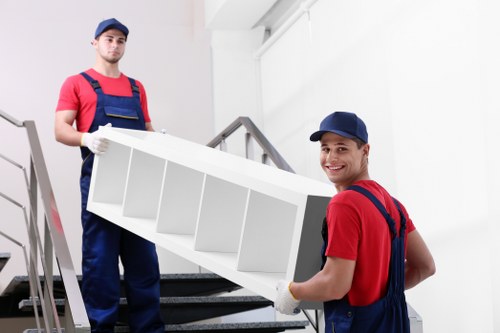 If conditions become too hazardous, the job should be delayed, adjusted, or carried out with additional control measures. Safe decisions must always take priority over speed or convenience.
Training, Supervision, and Responsibilities
Training is essential to support safe performance. All workers should receive instruction on manual handling, load security, vehicle checks, hazard awareness, emergency response, and customer property protection. Supervisors are responsible for making sure procedures are understood and followed. A Whitechapel removal van service must only be carried out by people who are competent for the task and capable of handling the physical demands involved.
Managers and team leaders must monitor work practices and intervene if unsafe behaviour is observed. Workers are responsible for looking after their own safety and the safety of others, including reporting defects, injuries, near misses, and concerns about fatigue. If a job requires more support than expected, additional help or equipment should be arranged before continuing. A culture of shared responsibility helps keep every man with van Whitechapel assignment safe and professional.
First aid arrangements should be available, and workers should know how to respond to accidents, cuts, sprains, falls, or vehicle incidents. Emergency procedures must be followed calmly and promptly.  If an incident occurs, the area should be made safe where possible, and details should be recorded so that lessons can be learned and future risks reduced. This policy will be reviewed regularly to ensure it remains effective, practical, and suitable for all man and van Whitechapel operations.